A regulation cut looks simple until it fails inspection by half an inch. Military members, firefighters, law enforcement officers, and others with workplace grooming standards in Lincolnton live by specific rules about length, bulk, and edges, and the trouble usually starts not with the cut itself but with grow out, interpretation, or a home touch up that goes sideways.
This troubleshooting guide starts from the symptom: what you see in the mirror a week or two after a cut at The BobShop, what likely caused it, and whether the fix is yours to make or belongs in the chair.
Start from the symptom
Most regulation problems fall into a few repeatable patterns. The top passes but the sides have bulked out over the ears. The length is right but the edges have gone fuzzy and no longer read as deliberate. Or the cut was compliant on day one and quietly stopped being compliant by day ten, because hair grows about half an inch a month and a high-and-tight shows every fraction of that growth.
Diagnosis matters because the fixes differ. Bulk is a blending problem. Fuzz is a schedule problem. A cut that drifts out of standard in ten days is a math problem, and it is solved by shortening the interval or choosing a version of the cut with more margin built in.
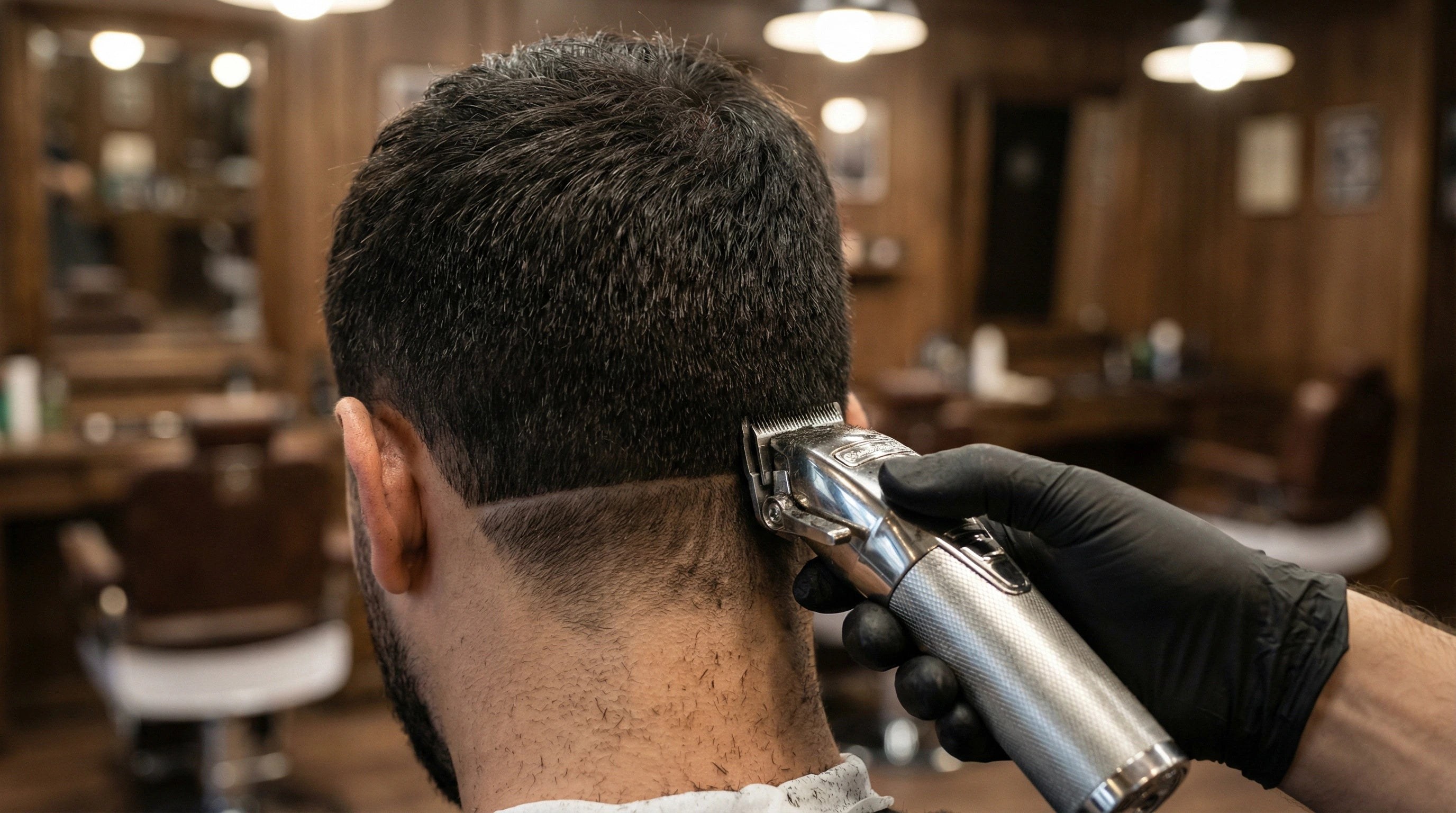
- Symptom: sides touching or covering the top of the ear. Likely cause: grow out on a cut with no margin. Fix at the shop with a taper refresh; at home, do not trim over the ear freehand, because uneven arches are harder to correct than length.
- Symptom: fuzzy neckline and edges within a week. Likely cause: fast growth and a natural neckline that fills in quickly. Fix with a between-cuts neck and edge clean up rather than a full reset every week.
- Symptom: top too long to lay flat or within bulk limits. Likely cause: the top was left at the maximum and grew past it. Fix by having the top cut with a week's growth already subtracted, so compliance lasts the full interval.
- Symptom: uneven fade or a visible line on one side. Likely cause: a home touch up attempt. Fix at the shop; blending out a home line usually means taking the fade slightly higher or shorter, once, correctly.
- Symptom: compliant after the cut, flagged before the next one. Likely cause: interval too long for your growth rate and standard. Fix the calendar first, to two or three weeks for most tight regulation styles.
- Symptom: irritation and bumps along the neckline. Likely cause: very close work on sensitive skin, repeated too often. Fix by discussing a slightly less close finish, better prep, and shaving direction at home with your barber.
Know your actual standard
Grooming standards vary by service, department, and agency, and they change. Typical rules cover maximum top length, how far hair may bulk out from the head, sideburn length, and whether hair may touch the ears or collar, but the exact figures belong to your organization's current regulation, not to a barber's memory. Bring the relevant points with you, or at least describe the checks you actually face, so the cut is built to the standard that will judge it.
Where a standard allows a range, the middle of the range is the smart target. A cut built to the exact maximum is a cut that is out of standard after a few days of growth. A cut built with margin stays compliant through the interval and still looks like the style it is supposed to be.
Grow out speed and the calendar
High-and-tight and similar cuts sit at the demanding end of the schedule for the same reason skin fades do: short lengths show growth immediately. Two to three weeks is the common rhythm for staying comfortably within standard, with some fast growers and stricter standards needing a clean up in between. Planning around known dates helps: inspections, ceremonies, and photo days should land in the first week after a cut, not the third.
If your schedule genuinely cannot hold that rhythm, tell your barber in Lincolnton. A slightly lower tight cut or a version with a touch more length everywhere can trade a small amount of sharpness for a longer compliant life, which is usually the right trade for a working schedule.
When to call the pro
Home care for a regulation cut should stay minimal: washing, and at most a careful tidy below the natural neckline if your barber has shown you how. Anything involving the fade line, the arch over the ear, or the top length belongs in the chair, because errors in those zones either break the standard visibly or take weeks to grow back into correction range. If you are ever unsure before an inspection, a quick clean up visit is cheaper in every sense than explaining a marginal cut.
Common questions
How often does a high-and-tight need cutting to stay in regulation?
Most wearers stay compliant on a two to three week rhythm, with the exact interval set by growth speed and how much margin the cut was built with.
Should I get my cut at the maximum length my standard allows?
No. Build in margin. A cut at the maximum is out of standard within days, while a cut slightly inside the limit stays compliant for the whole interval.
Can I fix a fuzzy neckline at home?
A careful tidy below the natural neckline is usually safe. Anything that moves the line itself, or touches the fade, should wait for the barber.
Photos in this guide are representative stock images.
← All guides from The BobShop← Back to The BobShop